Why Conversion Is the Most Important — and Most Overlooked — Stage of the Marketing Lifecycle
It is not the number of followers. It is the $$$
Marketers love the chase.
We obsess over awareness.
We pour budgets into traffic.
We celebrate engagement metrics like they’re trophies.
Yet when the dust settles, none of it matters without one thing: conversion.
Conversion is the moment everything becomes real. It’s the split second when curiosity turns into commitment, when attention becomes intention, and when all the strategy, all the spend, and all the storytelling finally deliver value.
So why do so many organizations treat conversion like an afterthought?
The Hidden Truth: Conversion Is Where Strategy Becomes Revenue
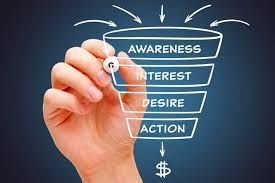
Think of the marketing lifecycle like a relay race. Awareness hands the baton to interest. Interest passes to consideration. And everyone hopes the final runner — conversion — sprints across the finish line.
But here’s the twist:
Most companies train their first runners and barely glance at the anchor.
Conversion is the only stage that:
- Creates measurable ROI
- Proves the value of every upstream effort
- Turns prospects into customers and revenue into growth
- Validates your messaging, targeting, brand promise, and experience
Awareness may spark the flame, but conversion keeps the lights on.
The Psychology Behind the Moment That Matters
Conversion is powerful because it taps into human decision-making at its most intense.
It’s the moment your buyer asks themselves:
- Do I trust you?
- Is this worth my money or time?
- Does this solve my problem right now?
Everything comes to a razor-thin point: clarity, simplicity, risk, urgency, and emotion.
When a brand wins this moment, it wins the customer.
Most Marketers Don’t Have a Traffic Problem — They Have a Conversion Problem
Here’s the uncomfortable truth:
- You don’t need more eyeballs; you need more action.
- A stunning website without a clear CTA is a museum.
- A landing page without frictionless flow is a maze.
- Brilliant creative without conversion strategy is art, not revenue.
Teams celebrate impressions, clicks, and traffic because they’re easy to measure and easy to brag about.
But conversion is the metric that exposes everything — the gaps in your funnel, the disconnect in your messaging, the friction in your user experience.
Brands don’t fail because people don’t know about them.
They fail because people don’t act.
Conversion Is Not the End — It’s the Catalyst
Great marketers understand another secret:
Conversion isn’t the finish line of the lifecycle — it’s the beginning of a new one.
Once someone converts, the door opens to:
- Retention
- Loyalty
- Upsell
- Advocacy
A single conversion can trigger a chain reaction of lifetime value. When you optimize for conversion, you’re not just optimizing a moment — you’re optimizing a relationship.
How to Elevate Conversion From Afterthought to Advantage
If conversion is the heartbeat of your lifecycle, then treat it with the precision it deserves:
- Simplify the path — Every click should have a purpose.
- Remove friction — Fewer fields. Faster load times. Clearer choices.
- Align value with timing — What they want and when they want it.
- Build trust quickly — Social proof, security, transparency.
- Use emotion + clarity — They must feel the need and understand the solution instantly.
- Treat every touchpoint as a pre-conversion moment — Because it is.
The Lifecycle Doesn’t Matter If the Moment Doesn’t Convert
- Awareness gets you noticed.
- Engagement gets you remembered.
- But conversion gets you paid — and keeps you growing.
The brands that win aren’t the ones shouting the loudest at the top of the funnel.
They’re the ones obsessively engineering the moment a prospect becomes a customer.
Conversion is not just the last stage.
It’s the most important stage.
It’s the moment marketing becomes meaning.
THE AIMC BLOG